MPG - environmental performance of buildings
Would you like to know and measure the CO2 footprint of the materials in your property in the Netherlands? Then have an Environmental Performance of Buildings (MPG in Dutch: Milieu Prestatie Gebouwen) calculation performed. The MPG is an important metric for a building's sustainability. The lower the MPG, the more sustainable the material usage.
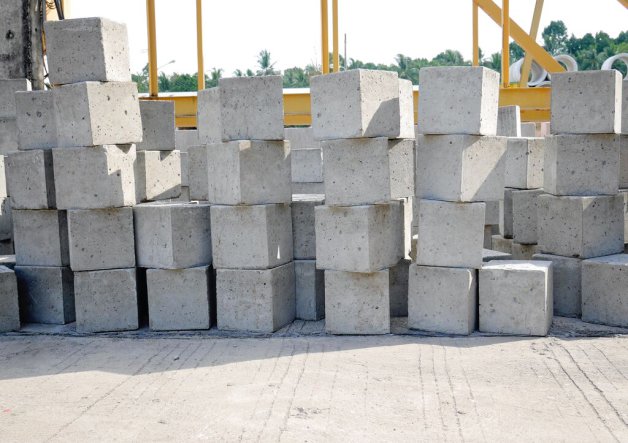
By using energy, heating, and cooling more sustainably, buildings are becoming increasingly energy efficient. This significantly improves the EPC (Energy Performance Coefficient). To further reduce a building's CO2 footprint, attention is now more often focused on embodied carbon, which is the CO2 footprint of the used building materials, furniture, carpeting, and other items in buildings. In other words, the CO2 emissions required to produce and process all these materials, products, and objects.
High-Quality recycling
Our MPG calculation maps out the embodied carbon in a building and promotes high-quality recycling of building materials and the use of environmentally friendly building products. Furthermore, the MPG limits the extraction of new raw materials and CO2 emissions.
Mandatory requirement
An MPG is a mandatory requirement when applying for an environmental permit for new office buildings (larger than 100m²) and new residential buildings in The Netherlands. Even for existing buildings, an MPG provides valuable insights for CO2 improvements during transformation and renovation.
EU Taxonomy
Under the new EU Taxonomy legislation, a carbon Life Cycle Analysis (LCA) is required for new buildings larger than 5000m². For new construction in the Netherlands, the MPG calculation can be used to meet this requirement.
Want to know more about the EU Taxonomy and what it means for you? Check out our FAQ.
Threshold value
The threshold value of the MPG is currently 1.0 for new offices. For new residential buildings, the value is 0.8. This requirement will be gradually tightened to 0.4 for both by 2030.
All environmental impacts
With our calculation, performed using a GPR calculation tool based on LCA data, you gain insight not only into the CO2 footprint but also into all environmental impacts of your building. By having a clear understanding of your CO2 emissions in every area, you can reduce your footprint and comply with the new EU Taxonomy regulations. This keeps your property up-to-date and future-proof, and helps you build on your sustainability ambitions.