The co2 footprint of a building
Two key factors determine the CO2 impact of buildings on the environment. On one hand, there is the energy performance, which includes the energy consumption for heating and cooling. On the other hand, there is the so-called Embodied Carbon Footprint, which refers to the total amount of CO2 emitted throughout the lifecycle of a building.
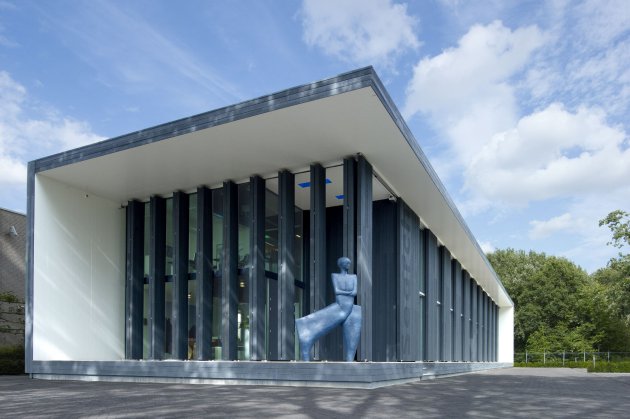
To achieve a fully CO2-neutral world by 2050, as agreed in the Paris Agreement, we must adopt an integrated approach that addresses both energy savings and the Embodied Carbon Footprint.
Energy performance assessments and services
Energy consumption for heating and cooling represents a significant portion of a building’s CO2 footprint. We support and advise you in achieving your energy performance goals through our energy performance assessments and services.
Embodied carbon footprint
Embodied Carbon refers to the CO2 emissions produced during the manufacture of building materials, other products used in a building, and during its construction and demolition. There is still much to gain here, for example by making smart material choices during renovation and major maintenance, and by better assessing opportunities for high-quality reuse of building elements.
Lifecycle analysis
To accurately determine the Embodied Carbon Footprint of both existing buildings and new constructions, we use Lifecycle Analyses (LCA). This scientific method allows us to evaluate the environmental effects of a building throughout its entire lifecycle, including raw material extraction, production, transportation, use, and eventual demolition.
Environmental performance of buildings
In the Netherlands, this calculation is also known as the Environmental Performance of Buildings (MPG). This standardized LCA method maps the Embodied Carbon of a building. Based on the results, we provide advice on how to further reduce the extraction of new raw materials and associated CO2 emissions.
Customized LCA profiles
When preparing MPGs and LCAs, we utilize various calculation methods, such as GPR and ONECLICKLCA. If needed, we can also create customized profiles and conduct LCAs ourselves.